Project
METRINO officially starts
The three-year European metrology project begins, bringing together 20 partners to strengthen reference materials, traceable methods, SOPs and uptake pathways for nanotherapeutics.
This timeline brings together selected technical outputs, community moments and five defining stages from METRINO's three-year journey, from the first stakeholder consultation in 2023 to the project's lasting technical and educational resources.
1 June 2023 31 May 2026 36 months

Explore the full project journey below, or use the filters to focus on five defining stages, technical outputs, project moments and engagement activities.
The three-year European metrology project begins, bringing together 20 partners to strengthen reference materials, traceable methods, SOPs and uptake pathways for nanotherapeutics.
The first public METRINO workshop at Nanomed Europe 2023 in Liverpool gathered stakeholder needs on nanomedicine characterisation, reference materials and biological matrices. The consultation helped connect the technical programme with practical community priorities from the beginning.
What changed: Stakeholder priorities informed early technical choices and the project's approach to uptake.
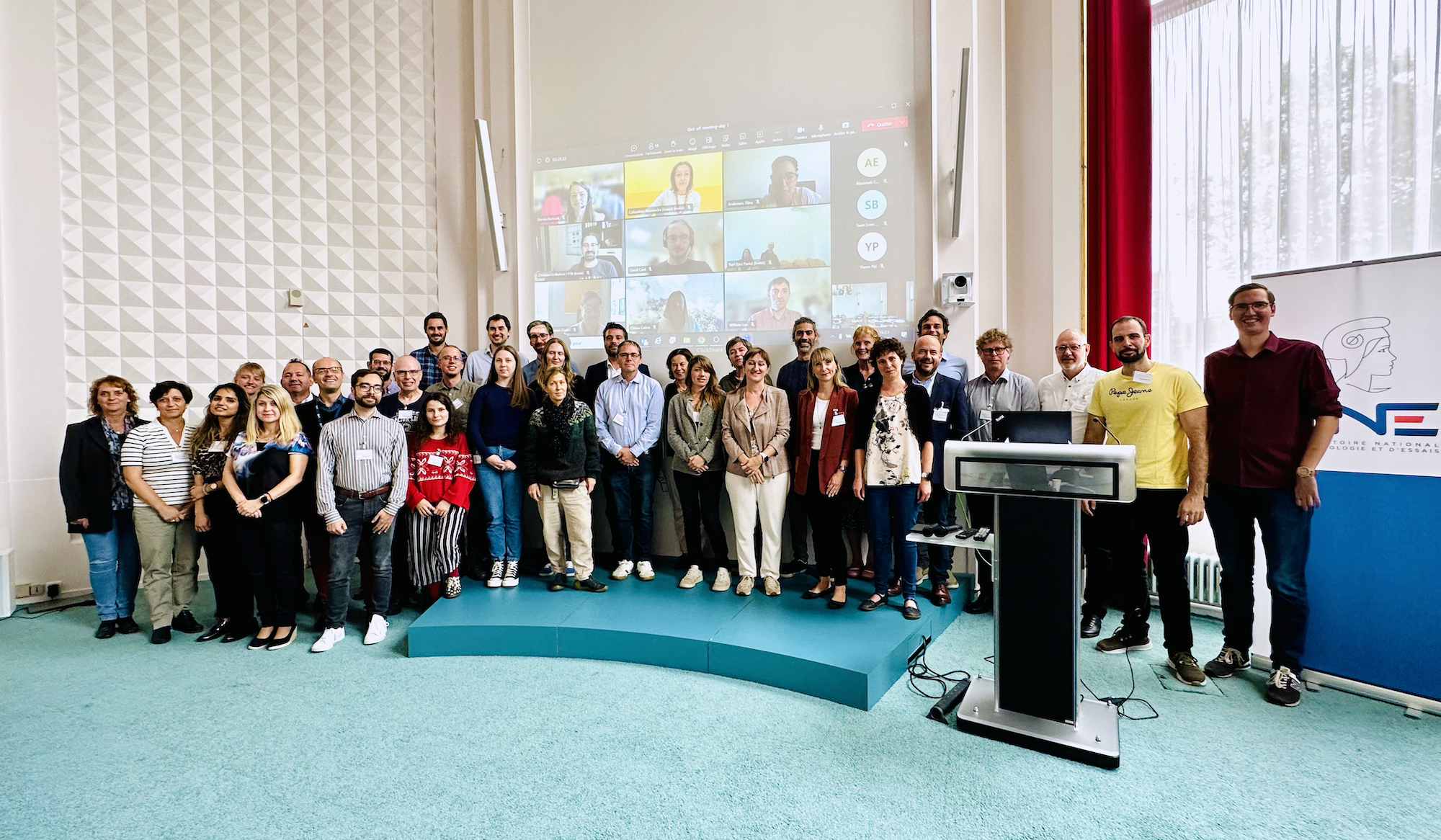
Partners aligned the work packages, confirmed the first technical priorities and selected representative nanoparticle systems and model biological matrices for the project studies.
The visual identity and dedicated website create a recognisable public hub for project news, events, partner information, educational content and results.
The workshop brought together nanomedicine, metrology, regulatory and standardisation communities to connect innovation needs with practical measurement challenges and international standardisation pathways.
METRINO joins MACRAME and NanoMeasureFrance for a public webinar translating standardisation, validation and method uptake into accessible guidance for the nanomedicine community.
D5 brought together the project's first structured technical resource, compiling practical work on matrix spiking, interference reduction, nanoparticle extraction and fractionation in biological matrices of increasing complexity.
What changed: Work on biological matrices became a consolidated protocol resource available to laboratories for review and adaptation.
Early responses from 22 participants across 16 countries highlighted a range of clinical and analytical needs and helped inform the project's stakeholder dialogue. The initial respondent group was predominantly academic, with limited clinical representation.
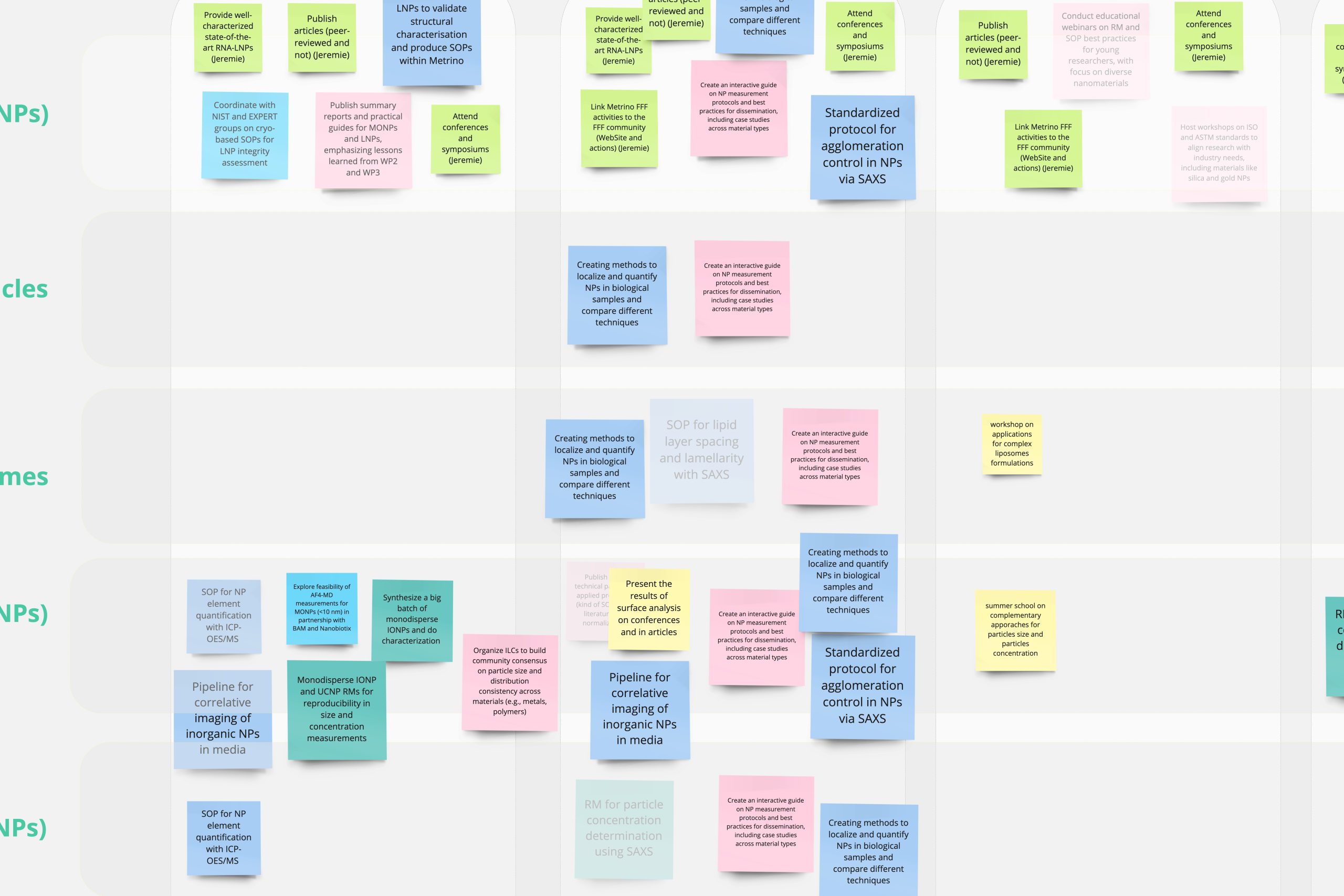
During the M18 consortium meeting, WP5 facilitated a collective exercise to review progress and prioritise the actions needed to strengthen impact, dissemination and uptake during the second half of the project.
D1 documents the preparation and characterisation of lipid-based and metal-oxide nanoparticles, including chemical composition, particle size distribution and polydispersity.
Partners compare SAXS, AF4, DLS, microscopy, spectroscopy and correlative imaging workflows across laboratories, instruments and representative nanotherapeutic systems.
This work moves METRINO from method development towards evidence on comparability, method performance and practical limitations.
What changed: Cross-laboratory testing showed where methods align, where results diverge and which limits matter in practice.
More than 50 participants joined the METRINO workshop in Barcelona to examine how reference materials, harmonised methods and better measurement practice can support nanomedicine development.
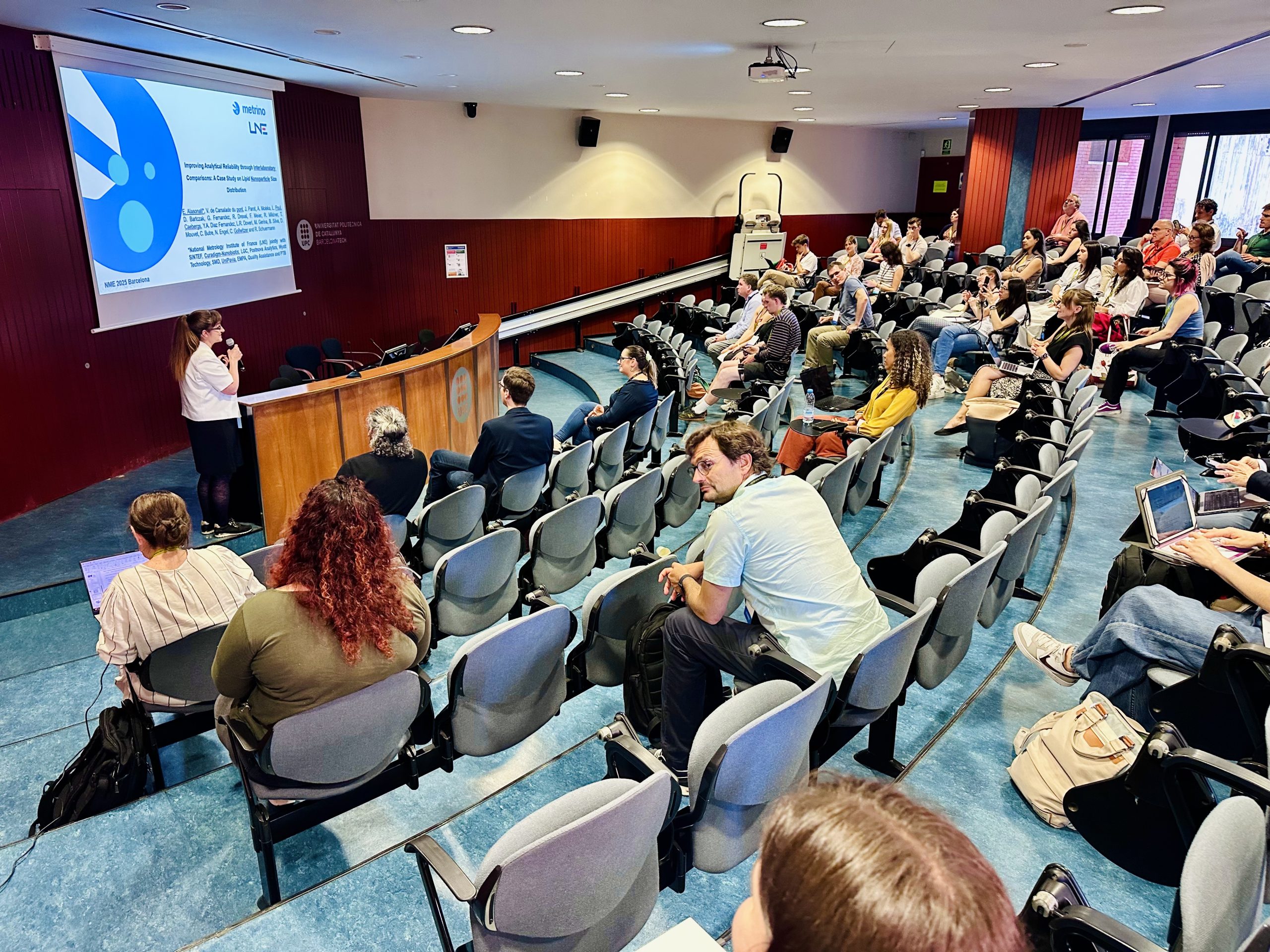
A focused session presents the METRINO approach and the multi-detector AF4 interlaboratory work developed to improve comparability in lipid nanoparticle size characterisation.
The first session launches a five-part public Academy series that turns METRINO expertise into open learning resources. This industry-led opening session focuses on GMP manufacturing, scale-up, quality by design and the measurement challenges behind nanomedicine industrialisation.
What changed: Project knowledge became a public learning series designed for use beyond the consortium.
The second Academy session explains why different methods can yield different yet valid results, and how the measurand, material and measurement question should guide method choice and interpretation.
A practical session presents the challenge of RNA LNP analytics and shows how harmonised AF4 workflows, recovery criteria and common data treatment can support interlaboratory comparability.
D7 consolidates SOPs for tissue and tissue phantom preparation and nanoparticle uptake or distribution measurements. D8 reports the interlaboratory comparison for identification, localisation and quantification of inorganic nanoparticles in tissue phantom samples.
The fourth Academy session showed how method sequencing, region-of-interest alignment, calibration and controlled sample preparation can make evidence from complementary imaging techniques easier to compare and interpret.
D2 reports initial stability and homogeneity studies across selected metal-oxide, multi-element, lipid nanoparticle and liposome candidates, using material-appropriate measurement methods and uncertainty evaluation.
The final Academy session focuses on measurand definition, surface coating characterisation, method selection and the evidence required before moving towards interlaboratory comparison and standardisation.
D4 brings together dimensional, structural and chemical methods for lipid-based nanoparticles and discusses what each approach can reveal, as well as its practical limitations. An associated peer-reviewed paper has since been published in the European Journal of Pharmaceutical Sciences.
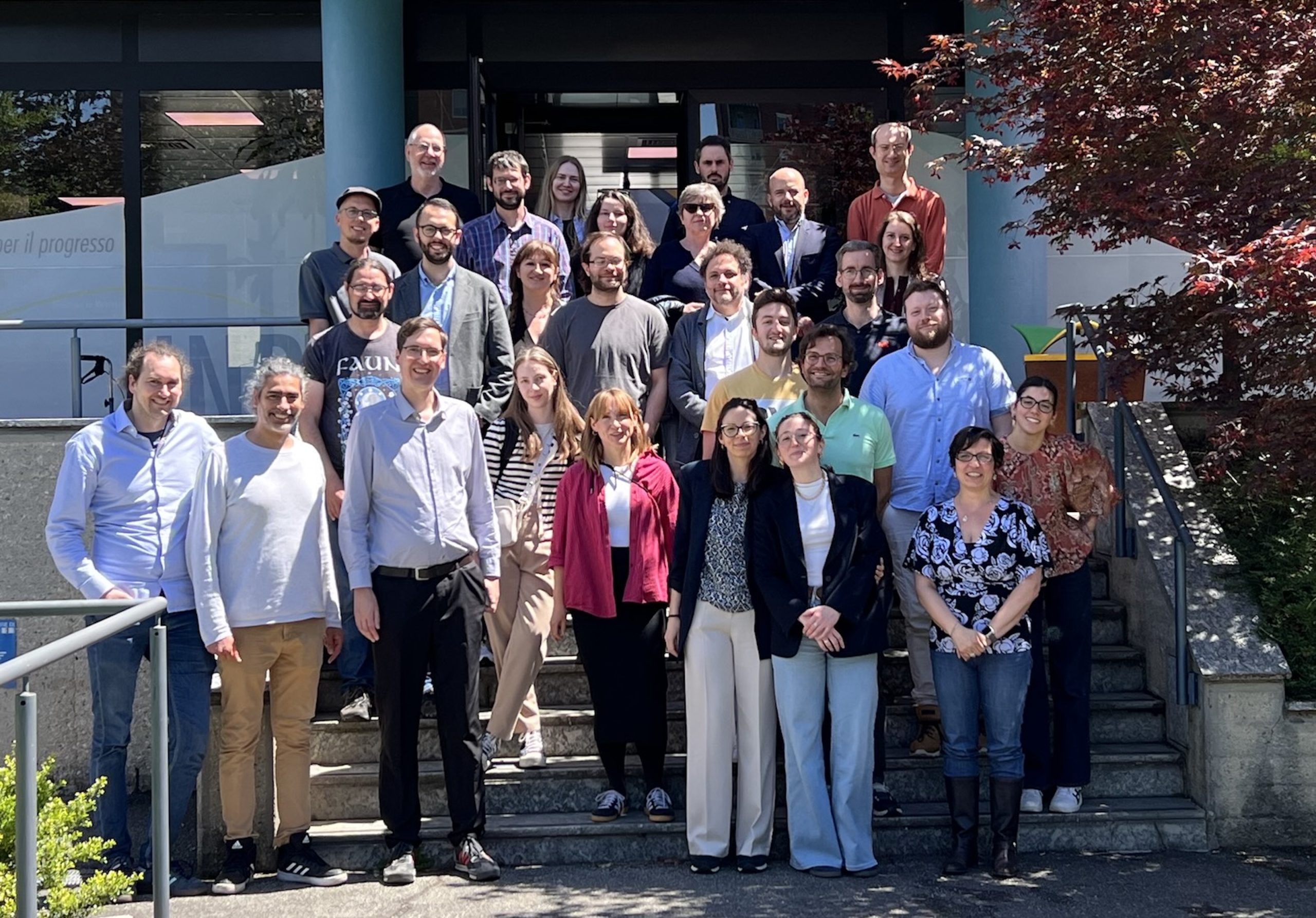
Charles Clifford, Chair of ISO/TC 229, joins the final consortium meeting at INRiM in Turin to explain what standardisation experts need from method developers and why standardisation considerations should be integrated from the beginning of a project.
37 participants joined the hybrid session.
Forty-one participants reviewed the main work package outputs, contributed to a hybrid Rose–Bud–Thorn exercise and prioritised future needs through Slido.
197 Miro contributions highlight seven recurring needs, including clearer SOPs, reference and quality-control materials, data treatment guidance, earlier standards mapping and continuity of the community.
METRINO researchers presented final project results in Dublin, connecting the project outputs with the wider European nanomedicine community and related initiatives.
As project delivery closed and dissemination continued, METRINO published its Nanomedicine Reference Material Roadmap and completed D3 and D6. Together, these resources bring together decision tables, SOPs and fractionation protocols tested and refined through collaborative work, practical guidance and future routes towards reference test materials, quality-control samples and, where appropriate, certified reference materials.
What changed: The project's methods and reference material work became a connected set of resources designed for continued use.
The funded programme concludes and the final reporting and uptake package brings together technical results, dissemination evidence, stakeholder lessons, standardisation actions and exploitation routes. The website, Academy replays, SOPs, datasets and results pages remain available for continued use after the project.
METRINO leaves a connected set of technical, educational and stakeholder-facing resources that can continue to support laboratories, developers, metrology institutes, regulators and standardisation communities.
Access METRINO resultsDocumented procedures, decision tools and workflows for advanced characterisation, biological matrices and tissue imaging.
Explore the SOPs → 2A realistic roadmap connecting candidate materials, reference datasets, quality-control needs and future community use.
Read the roadmap ↗ 3Five Academy replay articles and stakeholder lessons that translate technical results into accessible guidance.
Explore the replays →
The METRINO project has received funding from the European Partnership on Metrology (Grant #22HLT04), co-financed from the European Union’s Horizon Europe Research and Innovation Programme and by the Participating States. Views and opinions expressed are however those of the author(s) only and do not necessarily reflect those of the European Union or EURAMET. Neither the European Union nor the granting authority can be held responsible for them.