
Improving the characterisation of complex nanomedicines
WP2 compared physical and chemical characterisation methods for metal oxide nanoparticles, complex surface coatings, liposomes and RNA lipid nanoparticles. Its results have been consolidated into practical guidance, decision tables, SOPs, case studies, publications and learning resources.
Our results Explore the outputs and resources developed by WP2
Characterising a complex MRI contrast agent
WP2 selected the commercially available preclinical MRI contrast agent FeraSpin™ R as a case-study material. The formulation contains carboxy-dextran-coated iron oxide nanoparticles and presents a broad particle-size distribution, including small cores and larger particle assemblies. Because some agglomeration may be induced by sample preparation, the study carefully distinguishes what each technique and sampling scale can establish.
Partners combined SAXS, MD AF4, microscopy, thermal analysis and spectroscopic techniques to investigate particle size, subpopulations, chemical homogeneity and surface coating properties. The comparison showed the value and the limitations of combining results obtained at different length scales and sampling volumes.
View all METRINO publications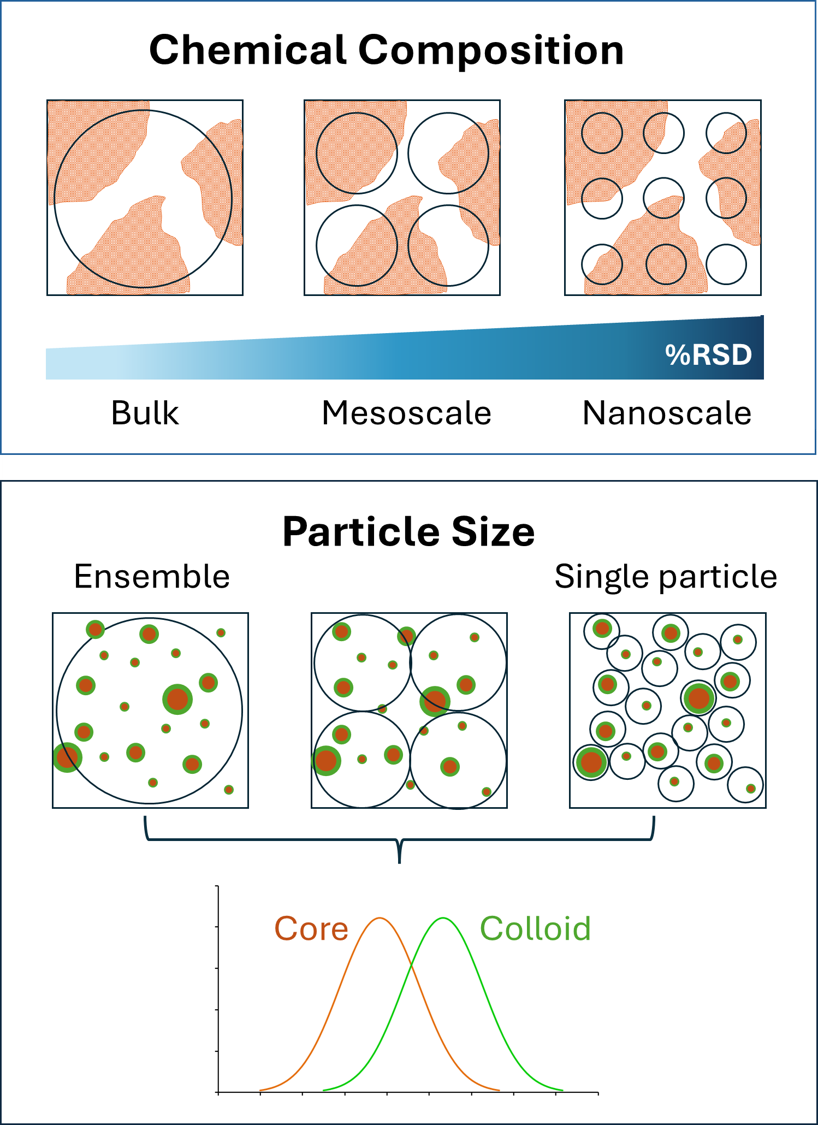
Resources developed for the nanomedicine community
WP2 delivered two complementary documents for the nanomedicine community: a good practice guide including decision tables and SOPs, and a tutorial article presenting an analytical strategy for liposomes and RNA LNPs.
A good practice guide for physical and chemical characterisation of nanomedicines
How can this resource help you?
Use the guide to support method selection and reporting for the physical and chemical characterisation of nanotherapeutics.
It contains three decision tables and nine SOPs developed through work on UCNPs, IONPs, HfO₂ nanoparticles and FeraSpin-like systems.
An analytical strategy for liposomes and RNA LNPs
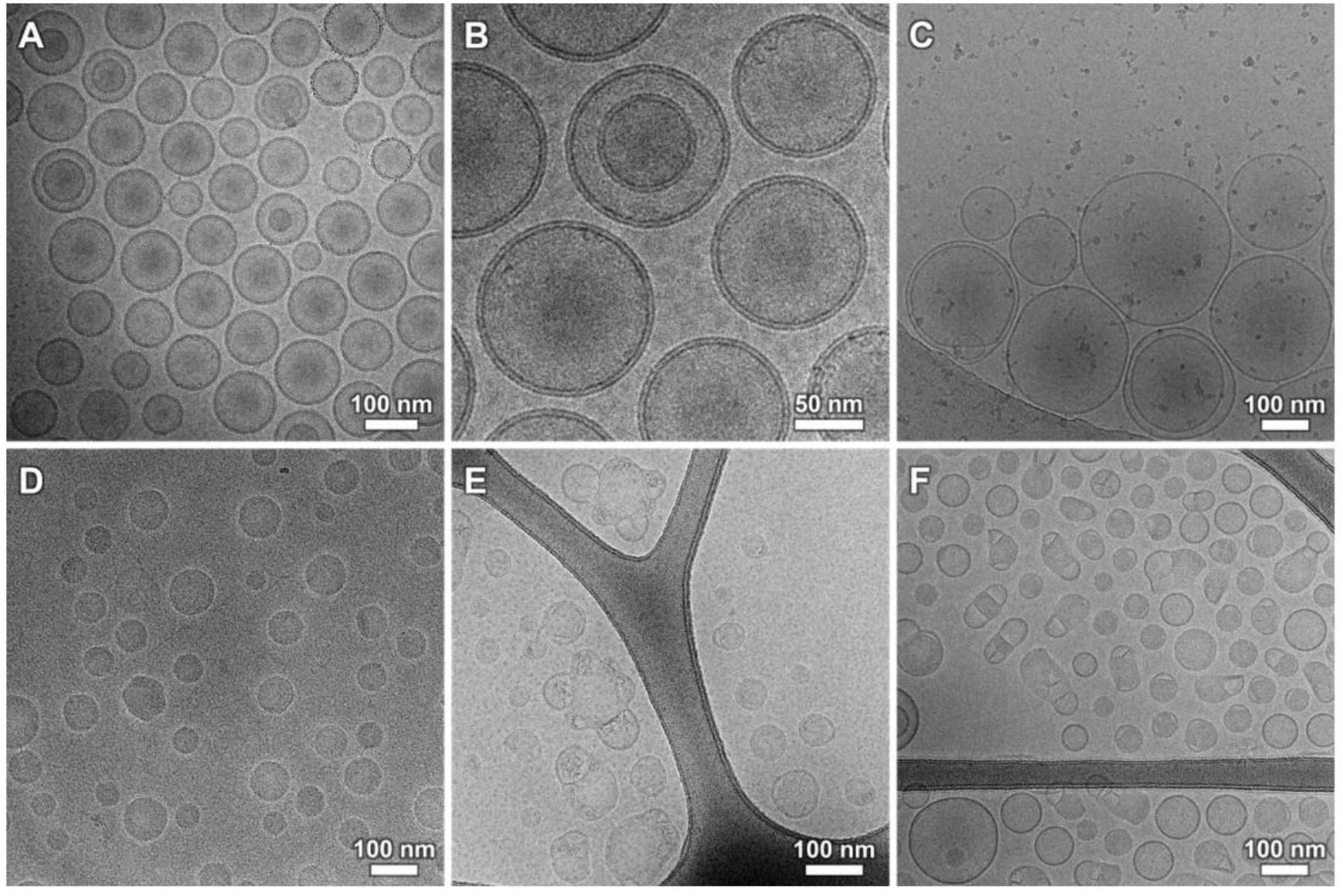
Published tutorial article
Liposomes and lipid nanoparticles: a tutorial for advanced chemical and structural characterisation
The article presents a coordinated analytical strategy for dimensions, internal structure, surface chemistry, lipid composition and RNA payload, showing why complementary methods are needed to investigate complex lipid-based nanotherapeutics.
What will you find in the article?
- How complementary methods can be combined to investigate particle dimensions, morphology and internal structure.
- Approaches for examining lipid composition and molecular organisation.
- Methods for assessing surface chemistry and particle composition.
- Strategies for evaluating RNA loading, encapsulation efficiency and payload integrity.
- Practical considerations and limitations affecting the interpretation of results across different techniques.
Cross-validating methods for citrate ligand quantification
Comparing complementary surface-analysis methods
Cross-validation of analytical methods for citrate ligand quantification on upconversion and iron oxide nanoparticles
The study compares RP-HPLC, TGA and PyGC-MS for citrate quantification on UCNPs and IONPs. It demonstrates the value of multimethod cross-validation while identifying material- and method-specific effects that can influence interpretation.
What does the comparison show?
- RP-HPLC provided reproducible, citrate-selective measurements for dissolved UCNP and IONP samples.
- TGA supplied complementary information on total organic content, but is not citrate-selective.
- PyGC-MS reduced sample preparation and sample-mass requirements, while revealing material-specific limitations for IONPs.
- Cross-validation helps identify method-dependent effects and strengthens confidence in nanoparticle surface analysis.
Learn from the experts How to better characterise your nanomedicine
Four questions to ask yourself before your measurement
Good measurement starts before the instrument is selected. Use these four questions to move from the decision you need to support to a method and result you can interpret with confidence.
What question are you trying to answer?
Start with the scientific or practical decision that the measurement needs to support.
What exactly do you need to measure?
Define the measurand clearly, including the property, material and conditions of interest.
Which method fits the material and measurand?
Choose a method suited to the material and measurand, and combine complementary techniques when they provide distinct or independently corroborating information.
What affects interpretation and comparison?
Document sample preparation, calibration, data treatment, uncertainty, assumptions and method limitations.
See how experts apply this framework when choosing and combining methods in the MetrINo Academy replay.
Choosing the Right Measurement Method: A Practical Approach
Presented by Dr Christian Gollwitzer, PTB, and Prof Yuri Antonio Diaz Fernandez, University of Pavia. Moderated by Dr Alexandre Ceccaldi, ETPN.
What you will learn in this webinar
- Why different methods can yield different yet valid results.
- How WP2’s decision tables support method selection for a specific material and measurand.
- How uncertainty evaluation and complementary methods support meaningful comparison.

What WP2 taught us From community needs to more meaningful and comparable characterisation
From characterisation challenges to practical lessons
WP2 started from recurring needs identified across the nanomedicine community and translated them into practical guidance for selecting, combining, interpreting and reporting physical and chemical characterisation methods.
Size alone cannot describe morphology, internal structure, surface chemistry, composition, concentration and payload integrity.
Complementary techniques are useful when each contributes different, clearly defined information about the material.
A core diameter, hydrodynamic diameter, projected diameter and radius of gyration are not directly equivalent.
Results from different sizing methods may be complementary, but they should not be treated as interchangeable.
A technique appropriate for a monodisperse metal oxide nanoparticle may not suit an LNP, liposome or aggregated formulation.
Composition, polydispersity, morphology, surface coating and physical state determine which techniques can provide useful information.
The reported value depends on the full process, not only on the instrument or analytical technique.
Sample preparation, calibration, uncertainty, fitting assumptions and data-processing choices should accompany the result.
From results to community use Practical routes to use, teach and build on the WP2 legacy
Three ways to use and build on the WP2 results
- Use them. Read and apply the decision tables, SOPs and analytical strategies when planning or reviewing measurements.
- Teach them. Use the Academy replay and practical questions to support students, colleagues and laboratory teams.
- Build on them. Reuse and adapt the resources when developing methods, training materials or future guidance, while keeping their stated scope and limitations visible.


These results reflect contributions from across the MetrINo consortium
Materials, analytical methods and cross-partner comparisons came together throughout WP2. See the participating organisations below.


