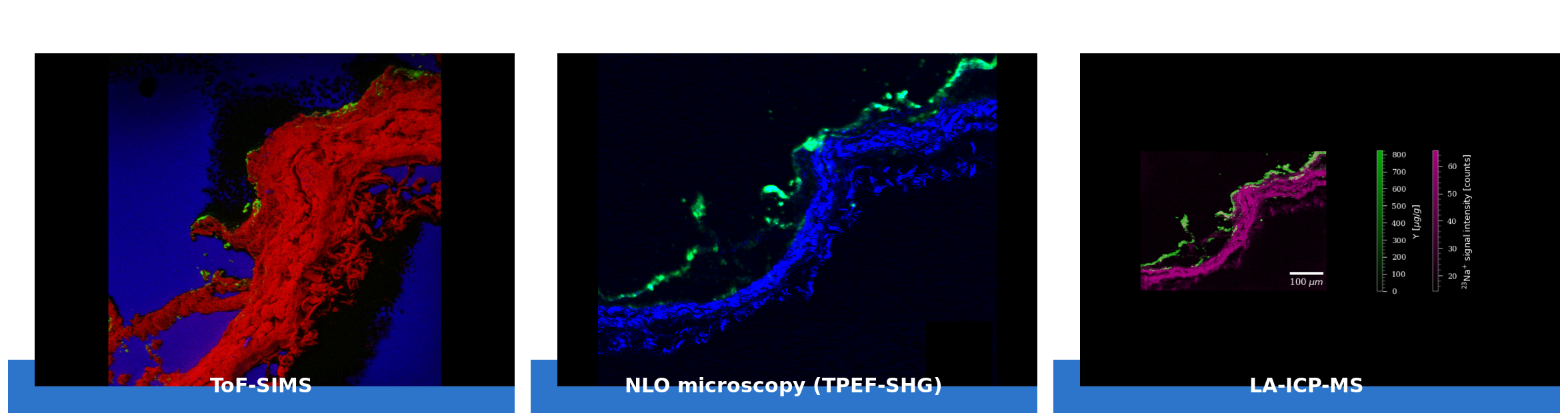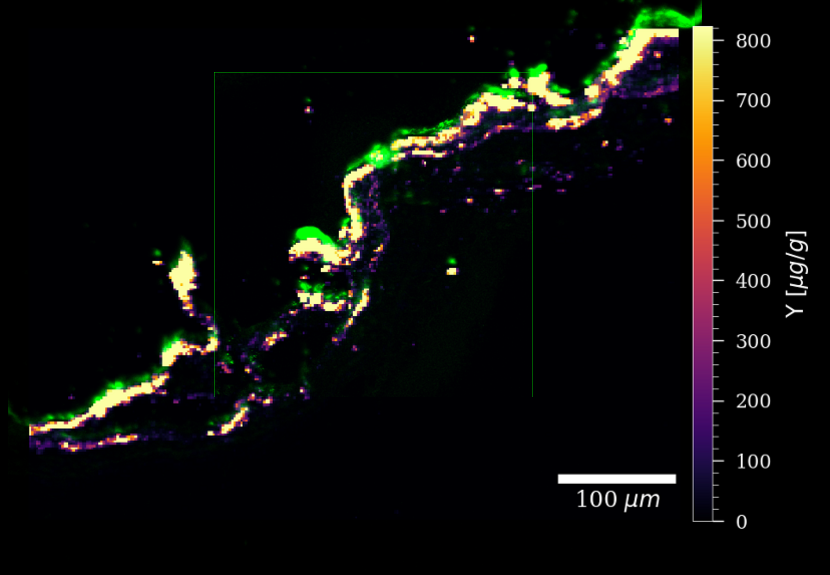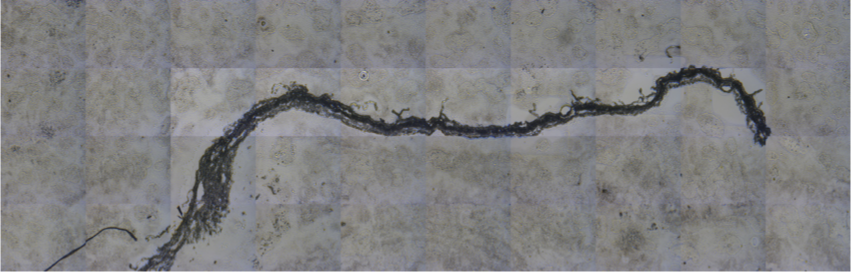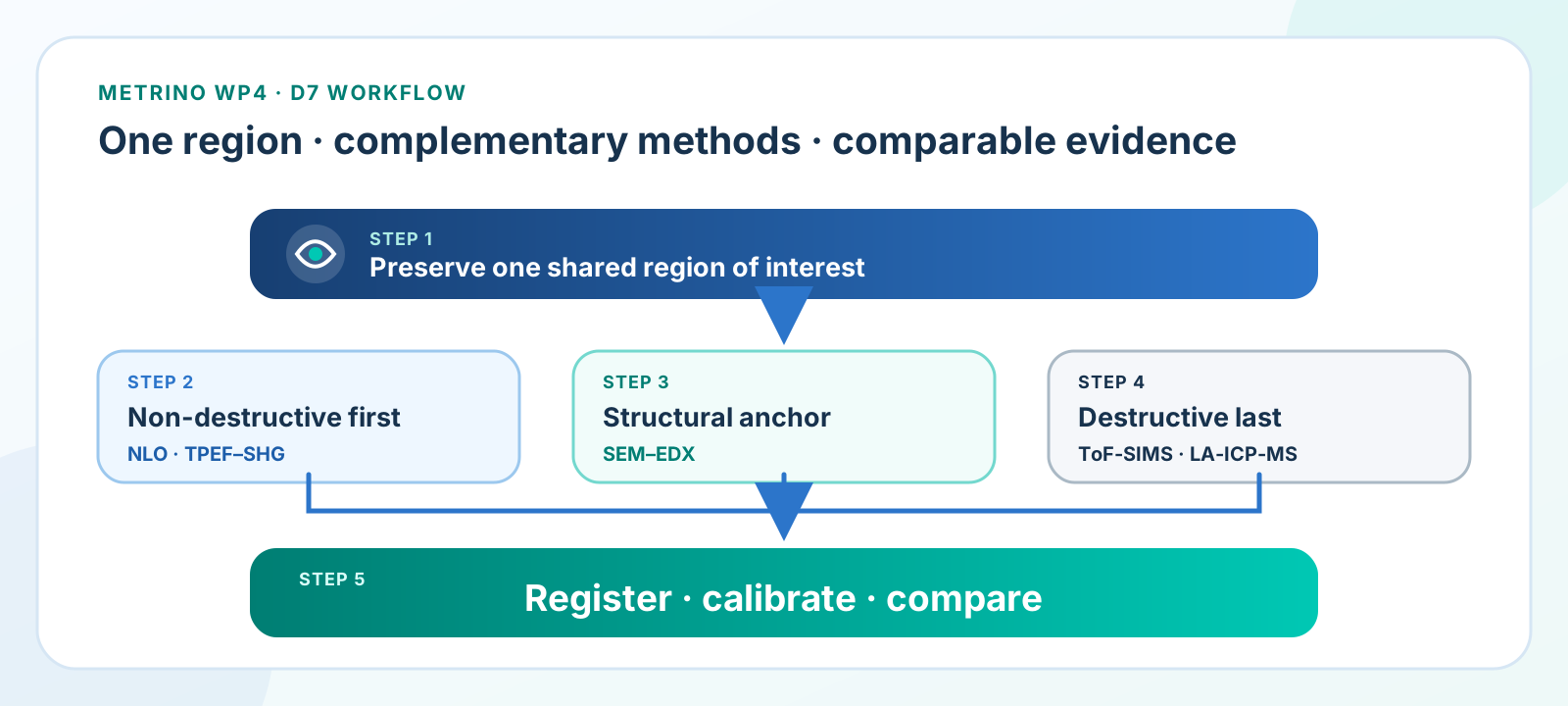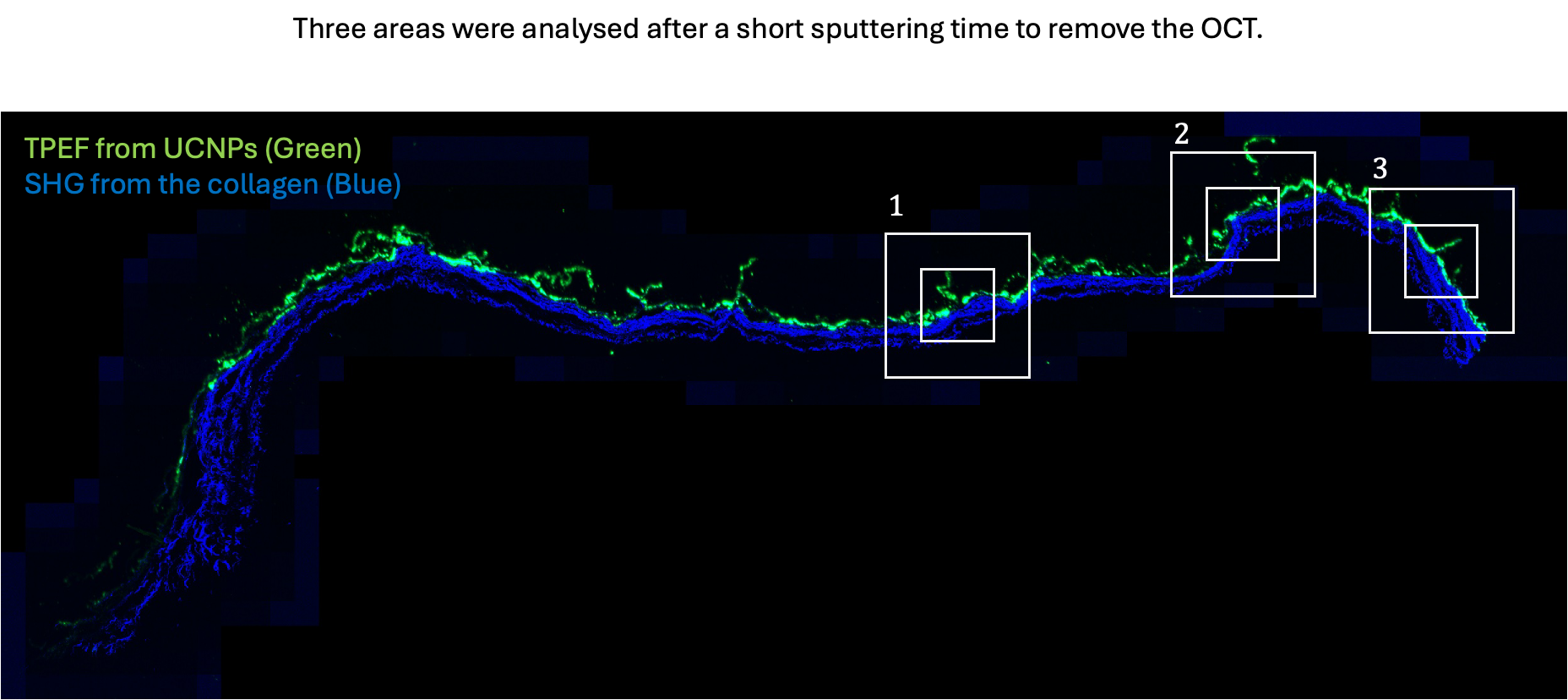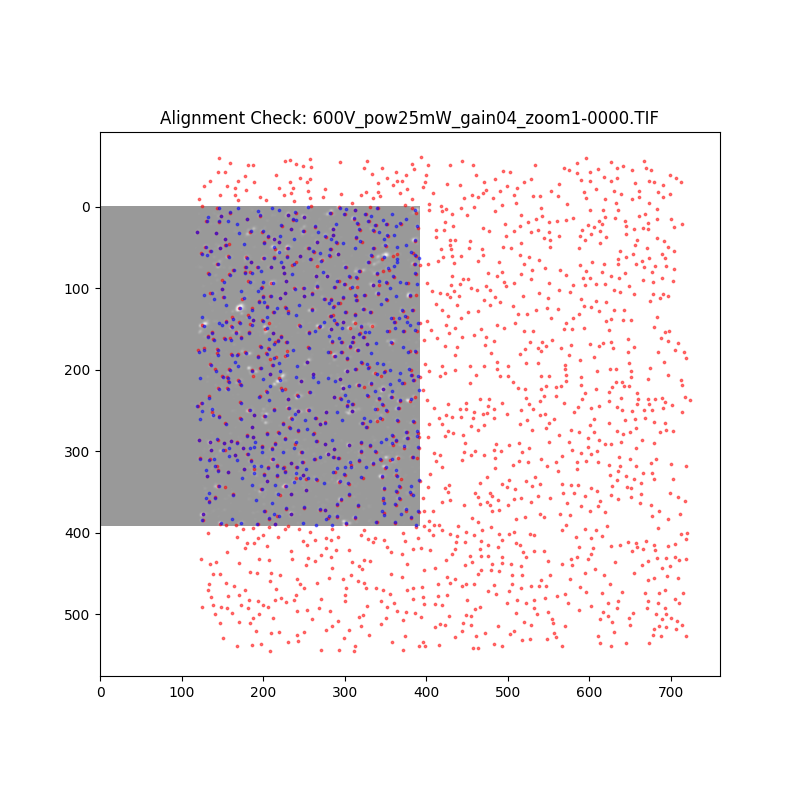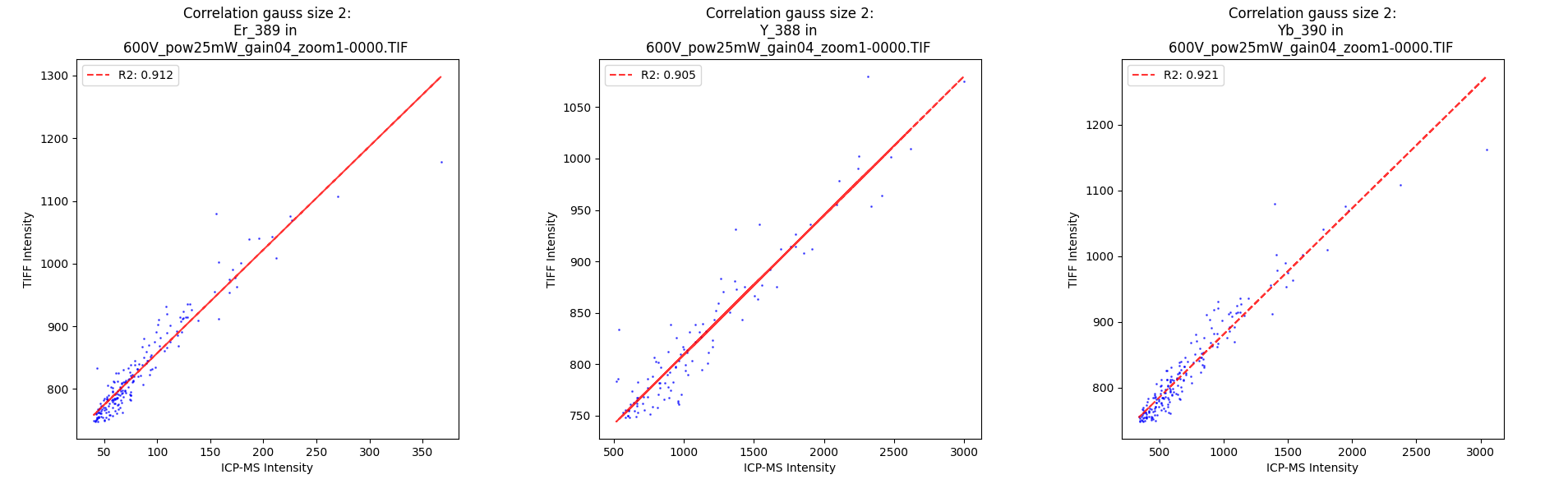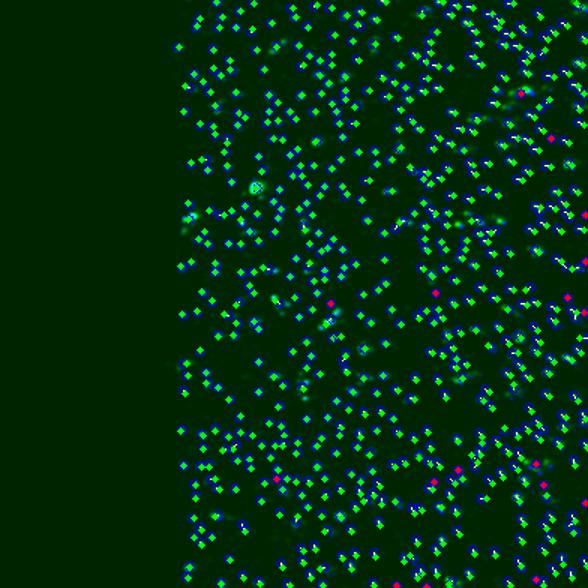

To advance the development of measurement methods to detect, localise and quantify NPs in biological tissues, to compare the results obtained by orthogonal techniques, and to evaluate their robustness and associated uncertainty. To support the methodological development, the following biological samples will be considered: model tissue phantoms, cell cultures and animal or human tissues spiked with controlled amounts of the previously characterised NPs (Reference Material Candidates).
An internal ILC will be organised and performed to consolidate the measurement methods, correlate the results and define measurement uncertainties. This internal comparison will provide the protocol for the initiation of an external ILC in the framework of the VAMAS TW40 (Creating Impact).
Measurement methods to detect inorganic nanoparticles in model tissue phantoms and in biological tissues: Electron microscopy, Spatially resolved LA-ICP-MS, Single-cell (SC) ICP-MS, SAXS,Micro CT imaging, Optical microscopy techniques (Fluorescence, CARS, SRS, TPEF), Benchtop X-ray fluorescence computed tomography (XFCT), TOF-SIMS.
Measurement methods to detect lipid-based nanoparticles and liposomes in biological tissue: TOF-SIMS, SAXS and Grazing-incidence small-angle X-ray scattering (GISAXS), Optical microscopy techniques (Fluorescence, CARS, SRS, TPEF).

Scienze e tecnologie biomediche, INRIM, Italy
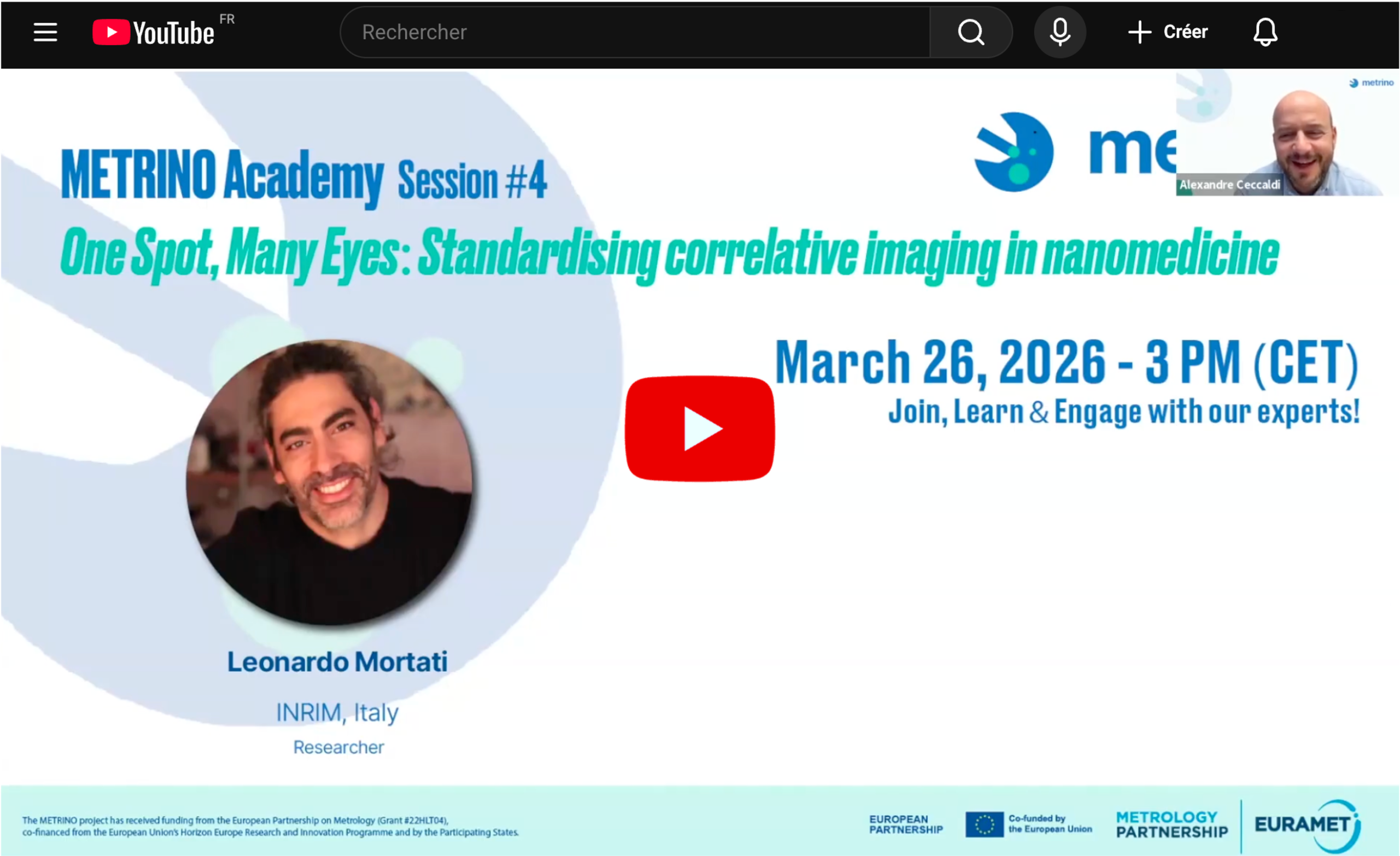
Short Bio: Dr. Leonardo Mortati is currently a researcher in the Advanced Material and Life Science Department at the Italian Metrology Institute (INRIM). His research interests are in nonlinear optics microscopy (Coherent Anti-Stokes Raman Scattering, Second Harmonic Generation and Two-Photon Excitation Fluorescence techniques), atomic force microscopy and image analysis algorithms for biomedical application with a focus on regenerative medicine, drug delivery and material characterization.
We are collecting results that will be posted here soon. Stay tuned.
The METRINO project has received funding from the European Partnership on Metrology (Grant #22HLT04), co-financed from the European Union’s Horizon Europe Research and Innovation Programme and by the Participating States. Views and opinions expressed are however those of the author(s) only and do not necessarily reflect those of the European Union or EURAMET. Neither the European Union nor the granting authority can be held responsible for them.