Developing candidate reference materials for reliable nanomedicine measurements
WP1 developed and characterised a diverse portfolio of metal oxide, multi-element and silica nanoparticles, lipid nanoparticles and liposomes. Feedback between material producers and measurement partners helped refine batches, select candidates and test their homogeneity, stability and measurand-specific performance.

Our results Materials, evidence and future directions for reliable nanomedicine measurements
Two systems prioritised for SAXS particle-size reference use
WP1 used production evidence and cross-partner measurements to assess seven candidate systems and identify the two with the clearest route towards further development for a defined SAXS particle-size use.
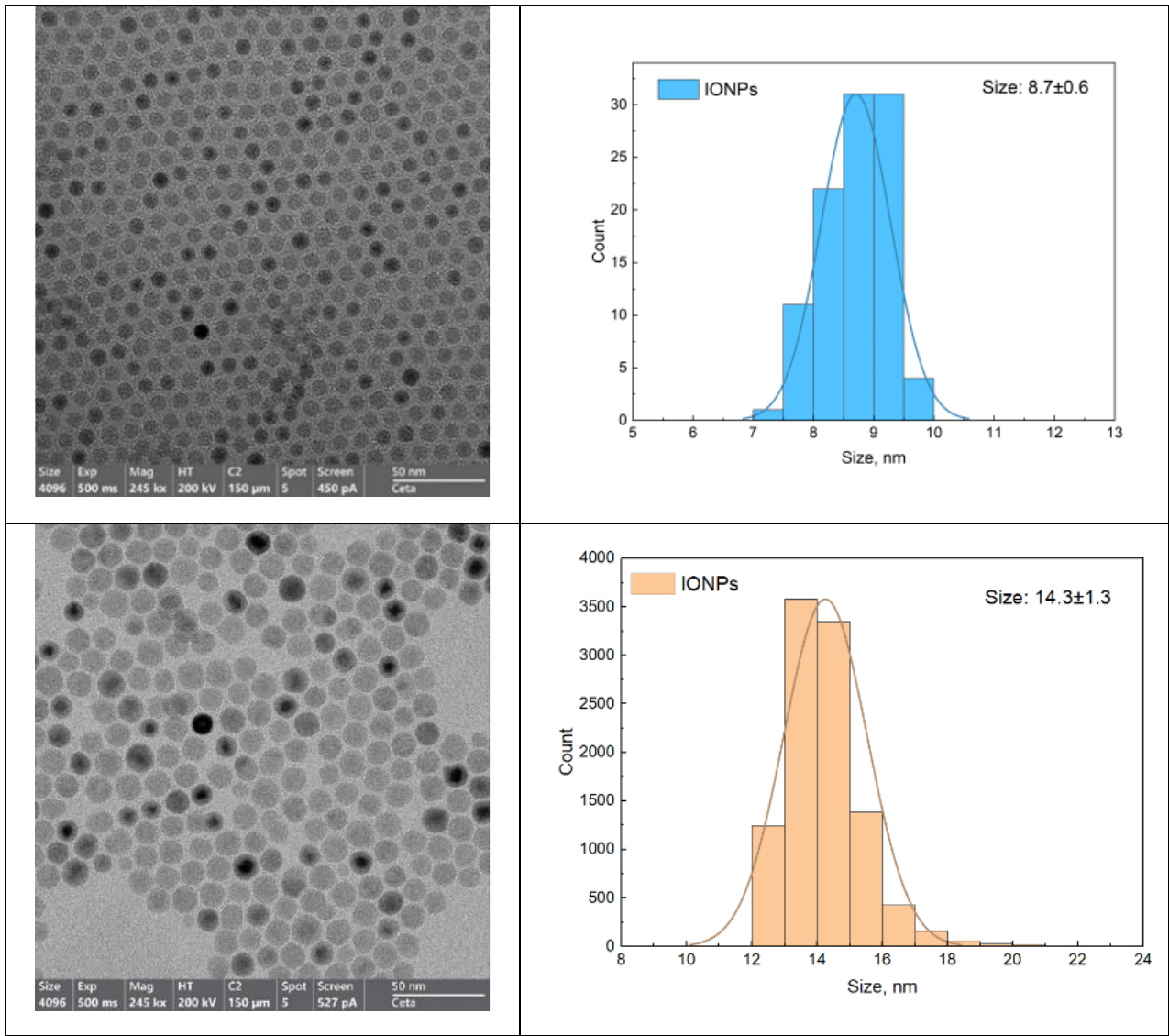
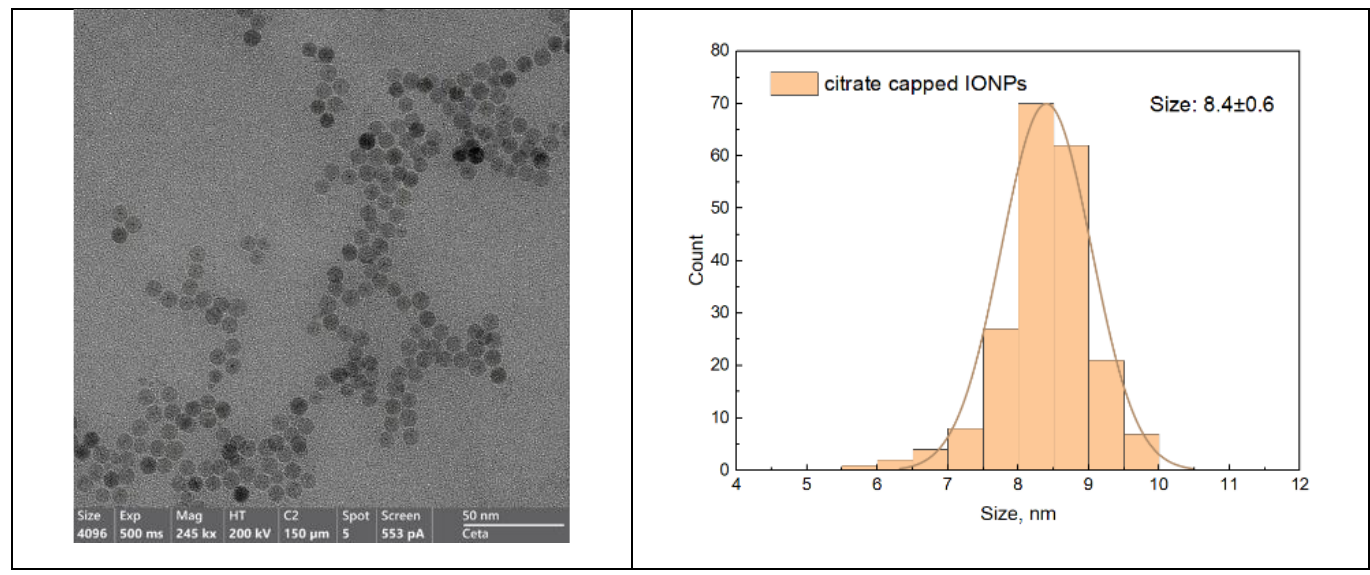
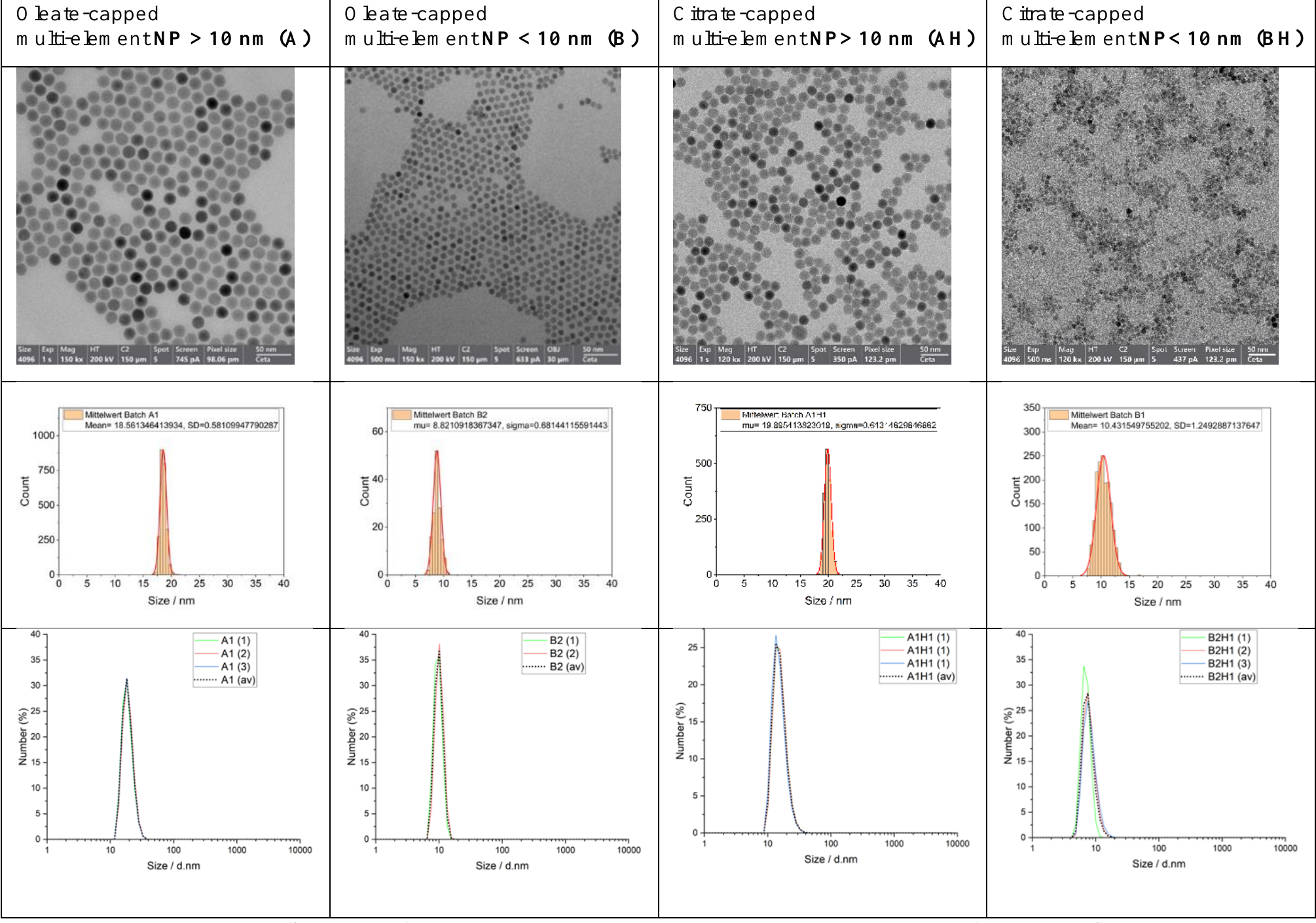
- Two priority candidates: BAM-IONP10 and BAM-UCNP20 emerged as the strongest candidates for future SAXS particle-size reference use.
- Measurand-specific evidence: no significant between-unit variability was detected for the assessed SAXS measurand, while SAXS and TEM supported primary-particle-size stability over the assessed period.
- Quantified SAXS performance: D2 estimated expanded relative size uncertainties at approximately 5% for BAM-IONP10 and 6% for BAM-UCNP20, corresponding to approximately 95% confidence under the study assumptions.
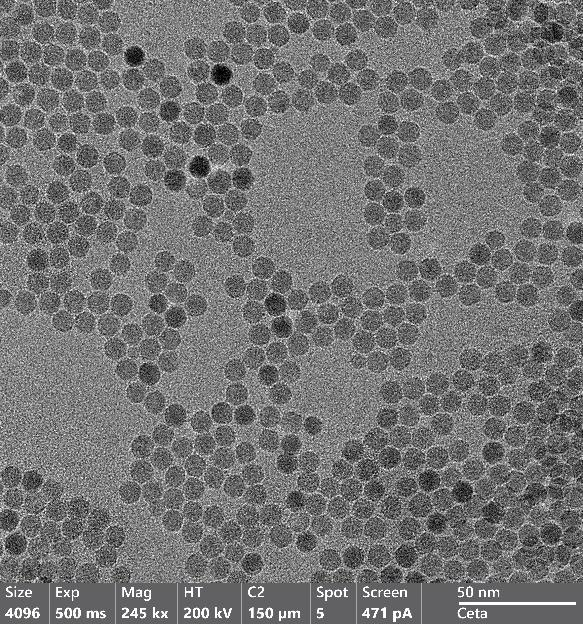
- Intended use
- SAXS particle-size measurements
- Size uncertainty
- Approximately 5% expanded relative uncertainty (k = 2)
- Evidence
- No significant between-unit variability detected for the assessed SAXS measurand; primary particle size stable over the assessed period
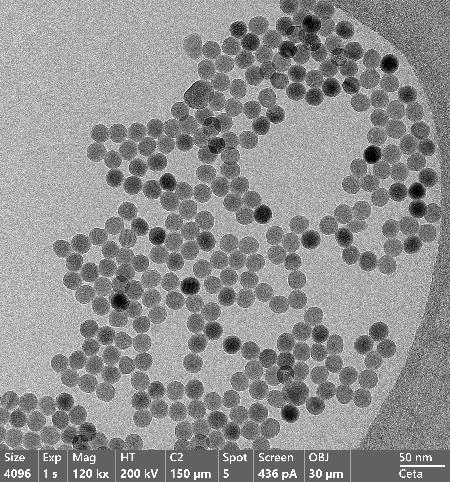
- Intended use
- SAXS particle-size measurements
- Size uncertainty
- Approximately 6% expanded relative uncertainty (k = 2)
- Evidence
- No significant between-unit variability detected for the assessed SAXS measurand; primary particle size stable by SAXS and TEM over the assessed period
Important limitations: DLS indicated aggregation-related changes in the hydrodynamic size of BAM-UCNP20, although SAXS and TEM did not show changes in primary particle size. No aggregation was detected for BAM-IONP10 by DLS over the assessed period. Particle number concentration carried substantially larger uncertainties, and extended stability studies were still in progress when D2 was submitted on 27 March 2026.
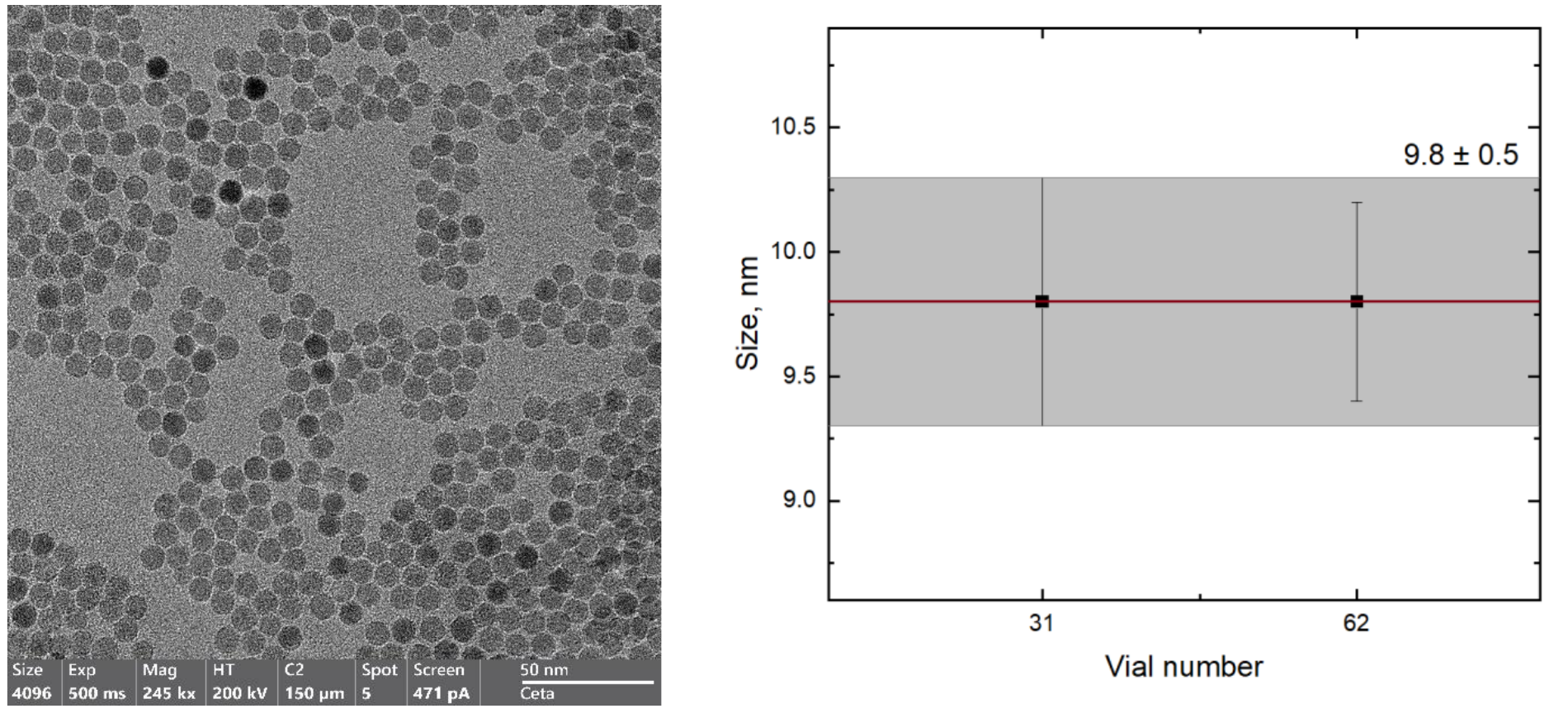
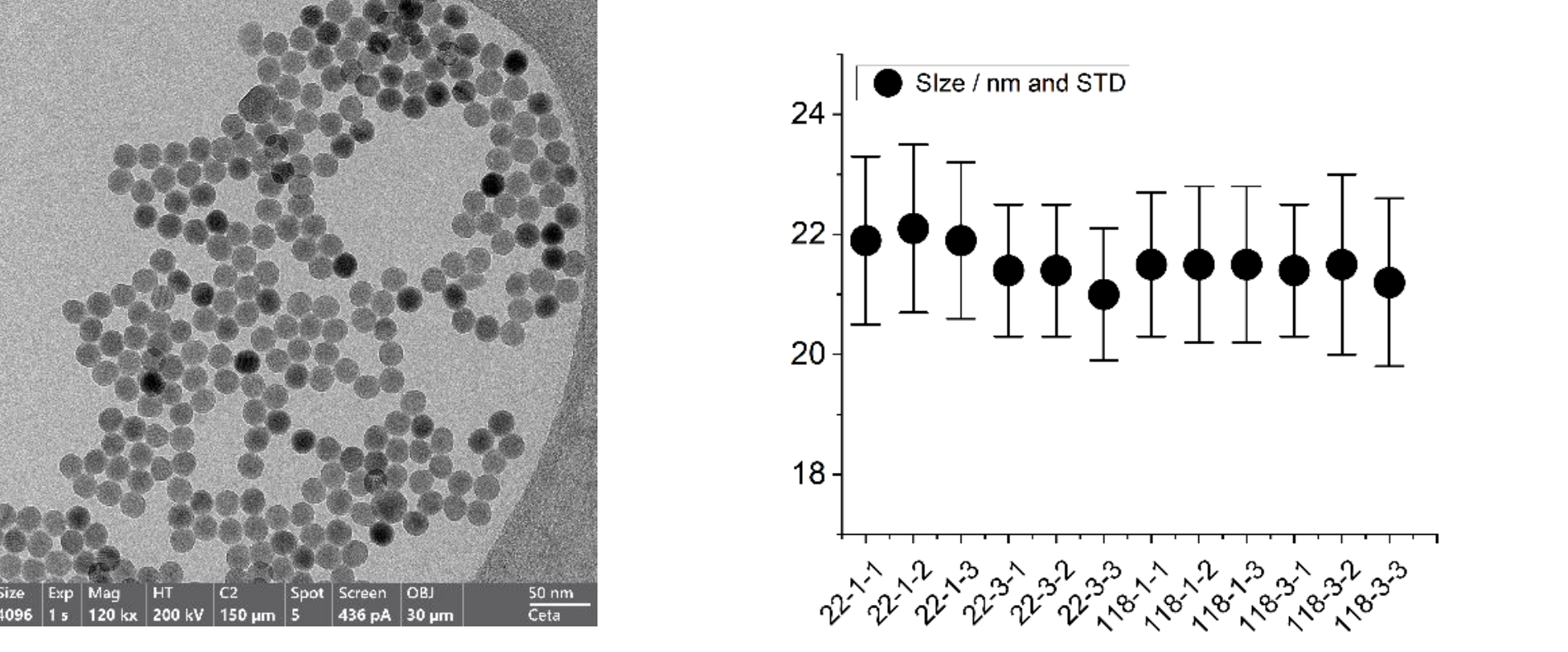
FeraSpin™ R: a product-relevant case study
The FeraSpin™ R work shows why a scientifically valuable nanomedicine model is not automatically the easiest candidate for metrologically traceable reference use.
Effect of sampling volume on measurements of size and chemical homogeneity of MRI contrast agent FeraSpin™ R
The study examined how the volume and analytical scale sampled can affect conclusions about particle size and chemical homogeneity in a complex iron oxide nanoparticle system.
It provides a strong scientific case study for nanomedicine characterisation while also illustrating why broad or aggregated particle-size distributions make robust, traceable SAXS value assignment more demanding than for more uniform systems.
Roadmap and project deliverables
The public roadmap translates WP1 evidence into future priorities. D1 and D2 document the candidate portfolio and the subsequent homogeneity, stability and uncertainty work. They are sensitive project deliverables and are not publicly available. The underlying studies are expected to be disseminated through future peer-reviewed publications, which will be added to the METRINO publications library when available.
Nanomedicine Reference Material Roadmap
What will you find in the roadmap?
The roadmap turns WP1 evidence into a practical sequence of priorities for nanomedicine reference material development. It clarifies what can be used or explored now, which material and measurement gaps need further work, and when the evidence could justify a longer-term RM or CRM route. It is a prioritisation tool, not a catalogue of certified materials.
It also explains a central trade-off: uniform particles are easier to characterise with traceable methods, while real nanomedicines are often more complex, polydisperse, proprietary or sensitive to storage and dilution. The roadmap uses that trade-off to frame realistic next steps.
Availability status: the roadmap is public. A sustainable public provision route for BAM-IONP10 and BAM-UCNP20 has not yet been confirmed.
Report on the synthesis and characterisation of synthetic lipid-based and metal oxide nanoparticles
What will you find in D1?
- The preparation and initial characterisation of the material portfolio distributed across METRINO.
- Metal oxide, multi-element and silica nanoparticles, mRNA- and siRNA-loaded LNPs, and liposomes.
- Synthesis routes and initial measurements used to support further candidate selection.
How can you use D1?
- Understand how the starting material portfolio was established.
- Compare production and batch-release characterisation approaches.
- Identify the material features that guided selection for further measurement, homogeneity and stability studies.
Report on the stability and homogeneity studies of selected candidate reference materials
What will you find in D2?
- Homogeneity and stability studies for seven selected systems.
- Links between each material, its relevant measurands and the methods used.
- Evidence on particle size, particle number concentration, chemical composition and surface charge, with uncertainty estimates where possible.
How can you use D2?
- Assess candidate suitability for a specific measurand and method.
- Plan homogeneity and stability assessments.
- Understand why evidence for one material property may not support another.
Learn from the experts How purpose, measurands and evidence shape reference material development
How a candidate becomes a useful measurement tool
WP1 showed that reference material development is a sequence of linked decisions. The route starts with the measurement need, not with a material that happens to be available.
The final route must also account for demand, production capacity, intellectual property, cost and long-term availability.
Surface chemistry makes this logic especially visible: the “surface” is not a single universal value. The measurand, signal-generation principle, sample preparation, validation strategy and intended decision must be considered together. Academy 5 shows how experts apply this purpose-first approach.
Unlocking Surface Chemistry in Nanomedicine
Presented by Dr Ute Resch-Genger, BAM.
What you will learn in this webinar
- How to define a surface chemistry measurand before selecting a method.
- How signal-generation principles and sample preparation shape the result.
- How intended use and uncertainty requirements influence the level of validation needed.
“If you know what you want, this could save you a lot of time.” Dr Ute Resch-Genger, METRINO Academy Session 5

What WP1 taught us From technical feasibility to realistic reference material strategies
METRINO aimed to make measurements more reliable and useful for nanomedicine. WP1 addressed the material foundation of that challenge: producing nanomedicine-relevant systems, characterising them, and determining which could support a clearly defined measurement purpose.
From WP1 evidence to practical consequences
D1 records a feedback loop between material producers and measurement partners. Characterisation results informed new batches and helped narrow the candidate portfolio.
A material cannot be selected only from its formulation or manufacturing data. Its suitability depends on how well the intended measurands can be assigned.
FeraSpin™ R provided a product-relevant case study, but its complexity made robust, traceable SAXS size assignment particularly demanding.
More uniform systems such as BAM-IONP10 and BAM-UCNP20 offer a practical foundation for establishing traceable measurements before more complex formulations can be addressed.
BAM-UCNP20 showed changes in hydrodynamic size by DLS, while its primary particle size remained stable by SAXS and TEM.
The measurand, method and conditions must accompany the conclusion so users understand exactly which property remained stable and which did not.
A candidate must combine producibility with measurand-specific homogeneity, stability and a realistic route to robust value assignment.
WP1 redirected advanced evaluation towards candidates with more uniform size distributions and a more realistic path to metrologically traceable use.
From results to community use Practical routes to reproduce, interpret and extend the WP1 evidence
Three ways to use and extend the WP1 results
The open dataset, publication, roadmap and Academy replay can already support analysis, planning and training. The candidate materials require a separately confirmed access route; D1 and D2 are sensitive project deliverables and are not publicly available.
- Reproduce and compare the open SAXS analysis. Use the Empa data, MATLAB scripts and fitting results to reproduce the deposited workflow and examine how analysis choices affect the reported SAXS result.
- Design future reference-test routes around a defined use. Use the public roadmap to connect intended use, measurand, evidence, demand and sustainable provision. Relevant future peer-reviewed publications will be added to the METRINO publications library when available.
- Train teams to separate relevance from reference suitability. Combine the FeraSpin™ R case study and Academy 5 to show why homogeneity, stability and surface chemistry conclusions always depend on the measurand, method and decision.
What is not publicly available: BAM-IONP10 and BAM-UCNP20 remain candidate systems, and a sustainable public provision route has not been confirmed. D1 and D2 are sensitive project deliverables and are not publicly available.

Dr Ute Resch-Genger
WP1 leader, BAM
Head of the Biophotonics Division at BAM, with expertise in optical metrology, surface chemistry, nanoparticle characterisation and reference material development.


