
What is the METRINO Academy, and why this topic ?
As the METRINO project enters its final phase, the METRINO Academy was launched to respond to a clear need from the community: practical, experience-driven guidance on how nanomedicines move from the lab to real clinical and industrial settings, where many promising technologies struggle to scale.
On 15 January 2026, the first METRINO Academy webinar brought together the community for an industry-led discussion with Anne-Sophie Larivière and Laëtitia Rio, senior experts from Nanobiotix directly involved in GMP manufacturing and late-stage development. Based on concrete industrial experience, the session explored how scale up, manufacturing constraints, and advanced characterisation choices collectively shape reproducibility, quality, and patient safety.
From the outset, one message framed the discussion: in nanomedicines, the process is the product. Understanding this early, and translating it into actionable development decisions, can make the difference between a scalable therapy and a costly dead end.
Missed the live session?
Watch the recording
We are pleased to announce that the full recording of the METRINO Academy #1 webinar is now available. If you were unable to attend live or would like to revisit specific discussions, you can access the replay here.
Watch the recording to hear directly how industrial teams approach scale up, characterisation, and GMP decisions in practice.
This industry led session includes the full presentation, live polls, and an extended Q&A. You can also jump straight to key chapters, including scale up challenges, characterisation limits, Quality by Design, and risk based control strategy.
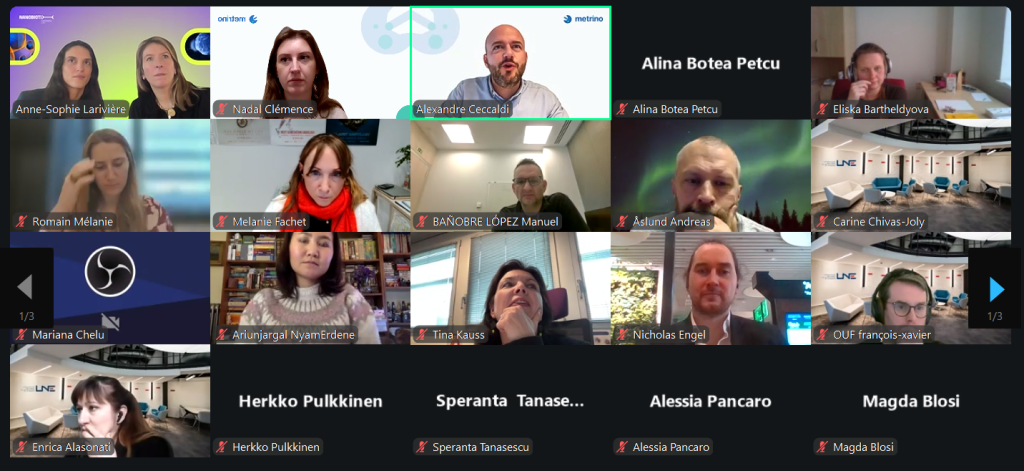
A highly engaged, international audience
This recording is particularly relevant for researchers, developers, and characterisation scientists working on nanomedicine projects approaching scale up, GMP readiness, or clinical translation. No prior GMP expertise is required to follow the discussion.
The strong engagement around this first METRINO Academy session confirmed the relevance of the topic :
20+ countries
International participation, 75% from Academic Institutions, 17% from Industry
9.1/ 10
Average satisfaction rating
> 95%
Participants likely or very likely to attend the next session
1h 20m
Average watch time
Beyond the numbers, the recording offers a clear, experience driven view of nanomedicine industrialisation, combining real GMP manufacturing examples, early development trade offs, analytical choices that matter beyond light characterisation, and risk based decision making with patients firmly in mind.
“In nanomedicines, PROCESS is the PRODUCT.”

Anne-Sophie Larivière, SVP Operations
With a chemical engineering background and experience spanning manufacturing and life sciences strategy, she framed industrialisation as a discipline of rigour, traceability, and patient protection. She addressed the realities of scaling nanomedicine processes, the constraints imposed by GMP environments, and the importance of anticipating industrial requirements early to avoid costly redesigns later on.
“Nano objects can never be fully characterised. The realistic goal is robust characterisation of the attributes that drive safety and efficacy.”
Laëtitia Rio, Associate Director in Pharmaceutical Products Development and Nanoparticles Physicochemical Characterisations
With 15 plus years in nanomedicine synthesis and advanced characterisation, spanning tech transfer and CMC, she focused on the core challenge of nanoscale variability. She highlighted why robust, orthogonal characterisation is essential to interpret data, build comparability, and manage risk throughout development.

Beyond individual perspectives, the discussion converged on a set of shared industrial realities. Scale up, GMP manufacturing, and advanced characterisation were addressed not as isolated topics, but as tightly interconnected decisions that directly shape reproducibility, quality, and patient safety.
Rather than focusing on specific products, the speakers emphasised transferable principles that development teams can apply early, regardless of their platform. These principles underpin the key take-home messages that emerged from the session.
Take home messages
The discussion converged on a set of shared conclusions that apply across nanomedicine platforms and development stages.
- Early and in depth characterisation of nano objects is a prerequisite.
Light characterisation alone such as size, pH, or zeta potential is not sufficient. - Small changes at the nanoscale can have major consequences.
Even minor physicochemical variations may significantly impact efficacy or patient safety. - In nanomedicines, the process is the product.
Prioritise robust characterisation of critical attributes that drive safety and efficacy, rather than the impossible goal of fully characterising everything. - Patients come first.
Product and process risks must be assessed continuously throughout the entire life cycle.
Highlights from the Q&A
The live Q&A highlighted the practical concerns teams face when moving towards scale up and GMP readiness.
The speakers stressed that relying on a single analytical technique is not sufficient, particularly when assessing reproducibility. For size measurements, regulators often expect at least two complementary methods, with microscopy frequently required at early development stages. The key message was to build strong evidence early, even if some advanced techniques will not be feasible for routine GMP testing later on.
GMP requirements apply once a product enters human clinical trials. Preclinical research and proof of concept activities can be performed outside GMP constraints. The transition to GMP should therefore be aligned with clinical entry, rather than imposed prematurely during discovery, while still anticipating future industrial and regulatory needs.
Surface characterisation remains particularly challenging at the nanoscale, and linking surface properties directly to biological outcomes is still limited.
When direct measurement is constrained, the recommended approach is to reinforce process control, focusing on material attributes and process parameters most likely to influence surface properties, thereby reducing uncertainty through robust manufacturing control.
The METRINO Academy will announce shortly a webinar entirely focusing on how well characterised surface chemistry is a key factor to smart manufacturing.
A clear warning emerged from the discussion, under characterising early. Light characterisation can create a false sense of reproducibility and lead teams to overlook variability that becomes critical during scale up. Investing in robust characterisation early, even if demanding, significantly reduces the risk of failure at later industrial stages.
The full discussion, including detailed answers and exchanges, is available in the recording.
Why this session is worth watching
This first METRINO Academy session goes beyond describing challenges. It confronts the concrete decisions development teams make every day, often much earlier than they realise. Through real industrial experience, the discussion shows how choices around characterisation, process definition, and GMP readiness shape reproducibility, scalability, and patient safety long before manufacturing begins.
For anyone developing nanomedicines today, the recording offers more than insight. It provides a practical lens to reassess current assumptions and identify questions that may be costing time, data, or confidence if left unaddressed.
A Sneak Peek into Session 1
A quick snapshot from the live polls of Session 1
Swipe to browse, hover to zoom, click to open full size.
We asked our participants some questions about their work and their opinion on nanomedicine challenges, see their answers below.
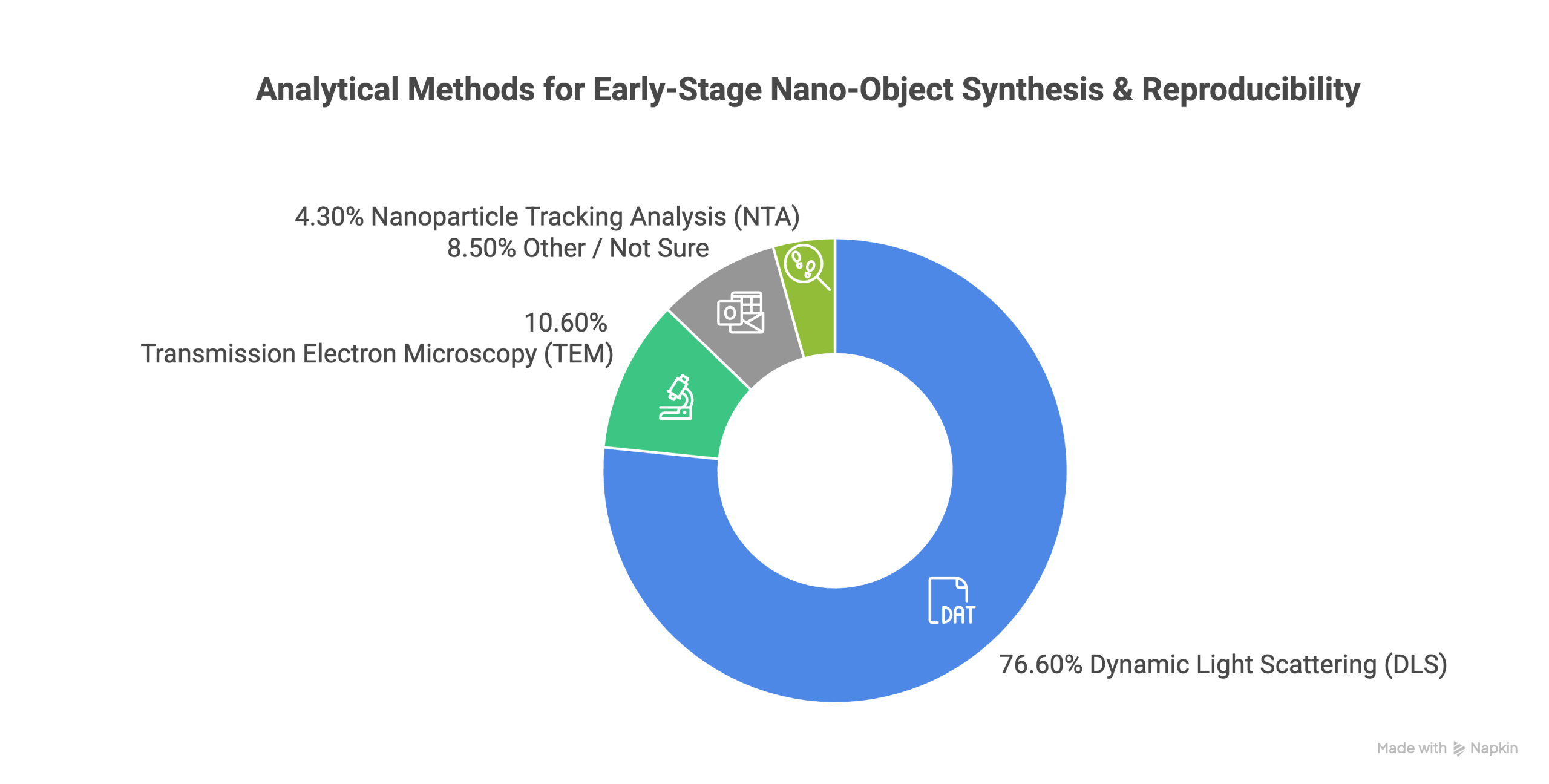
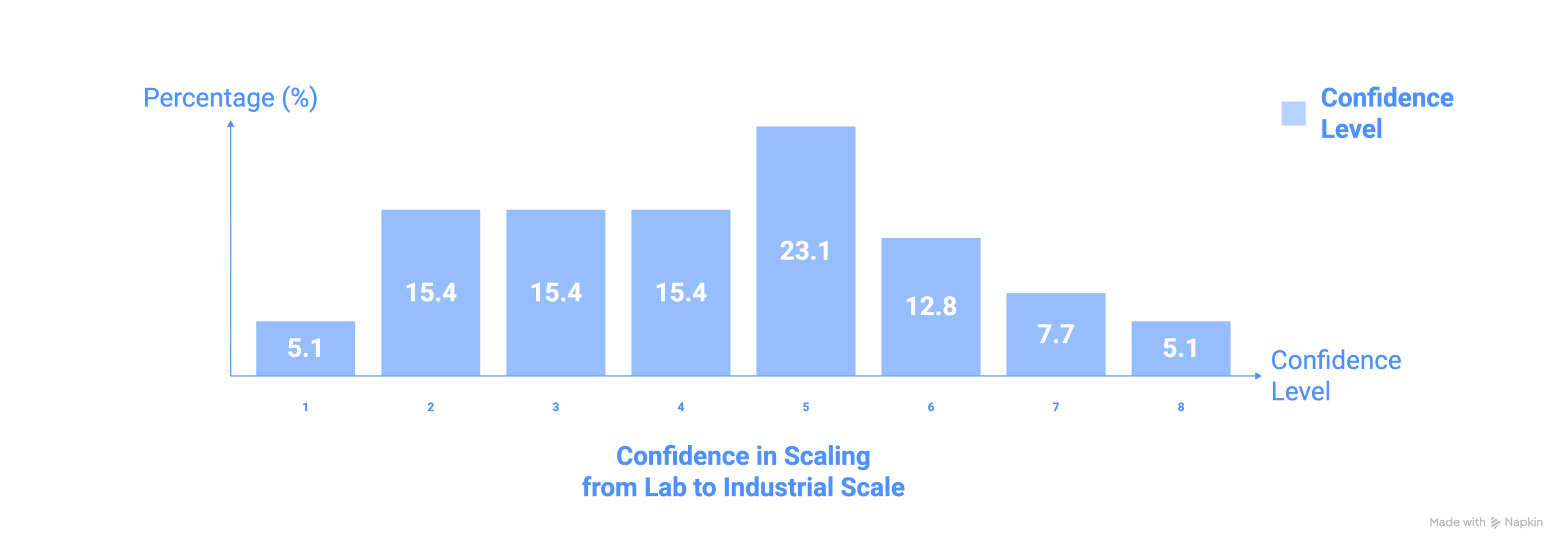
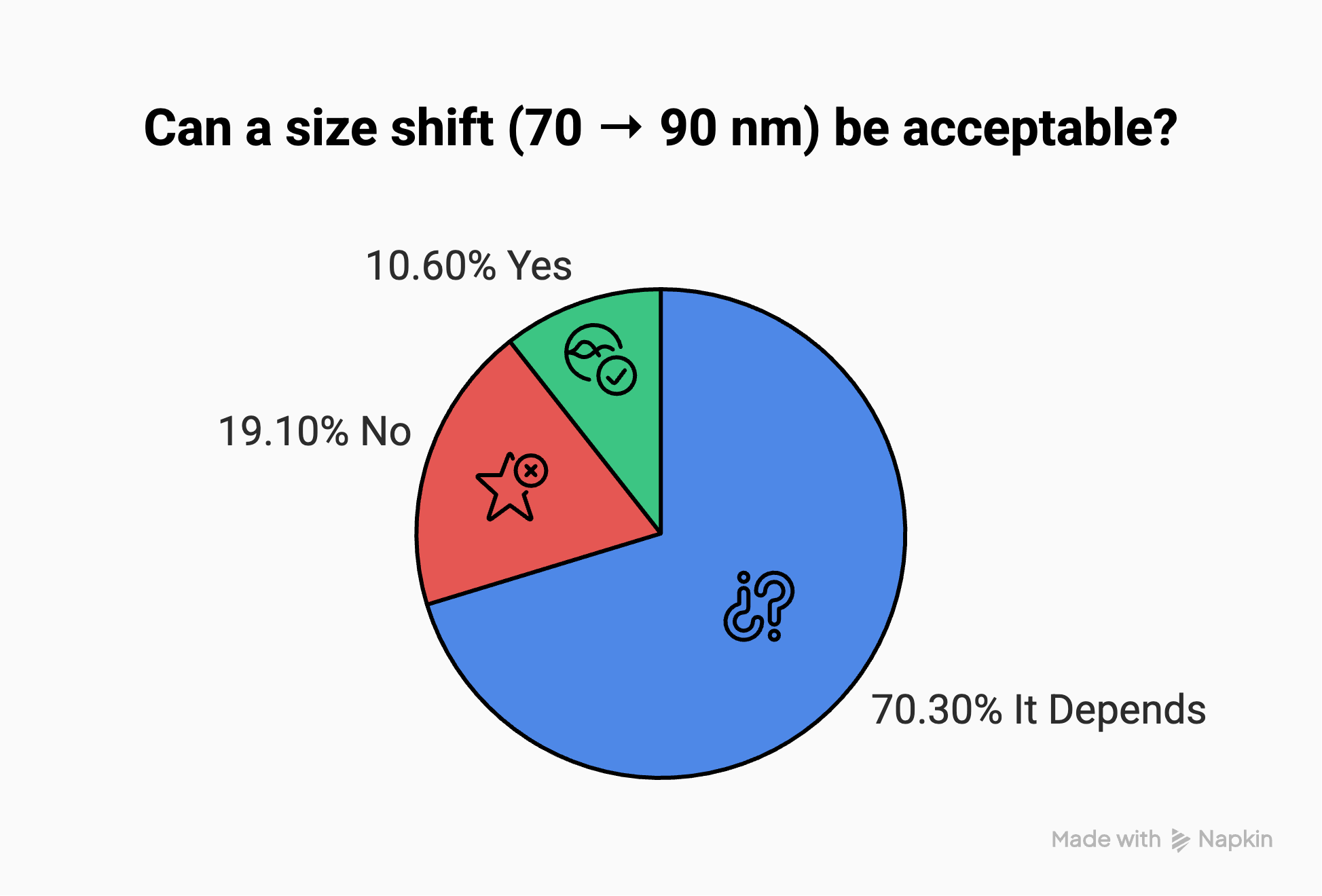
Tip: on desktop, you can scroll horizontally with Shift plus mouse wheel, or trackpad swipe.
Watch the full recording to hear the discussions around these polls.
WATCH THE RECORDING HEREMETRINO Academy Session 2
Session 2 tackles a question many teams face early on: how to choose the right analytical method in nanomedicine. We will explore how different techniques probe different properties, why results are not always directly comparable, and how to make informed method selection decisions depending on your objective and development stage.
- Practical method selection guidance and real examples
- Lessons learned from interlaboratory activities
- Decision support across size, number concentration, composition, and structural integrity
Registration details coming soon.
About the METRINO Academy
The METRINO Academy is a short webinar series designed to translate METRINO outcomes into practical, user oriented guidance for the broader community, with a focus on real life decision making, including quality control, reproducibility, and standardisation readiness.
Join our growing community on LinkedIn and connect with researchers, industry and regulators working on nanomedicine metrology.
About Nanobiotix
Nanobiotix is a late stage clinical biotechnology company pioneering disruptive, physics based nanotherapeutics, with the ambition to improve outcomes for people with cancer and other challenging diseases.
More information at nanobiotix.com
